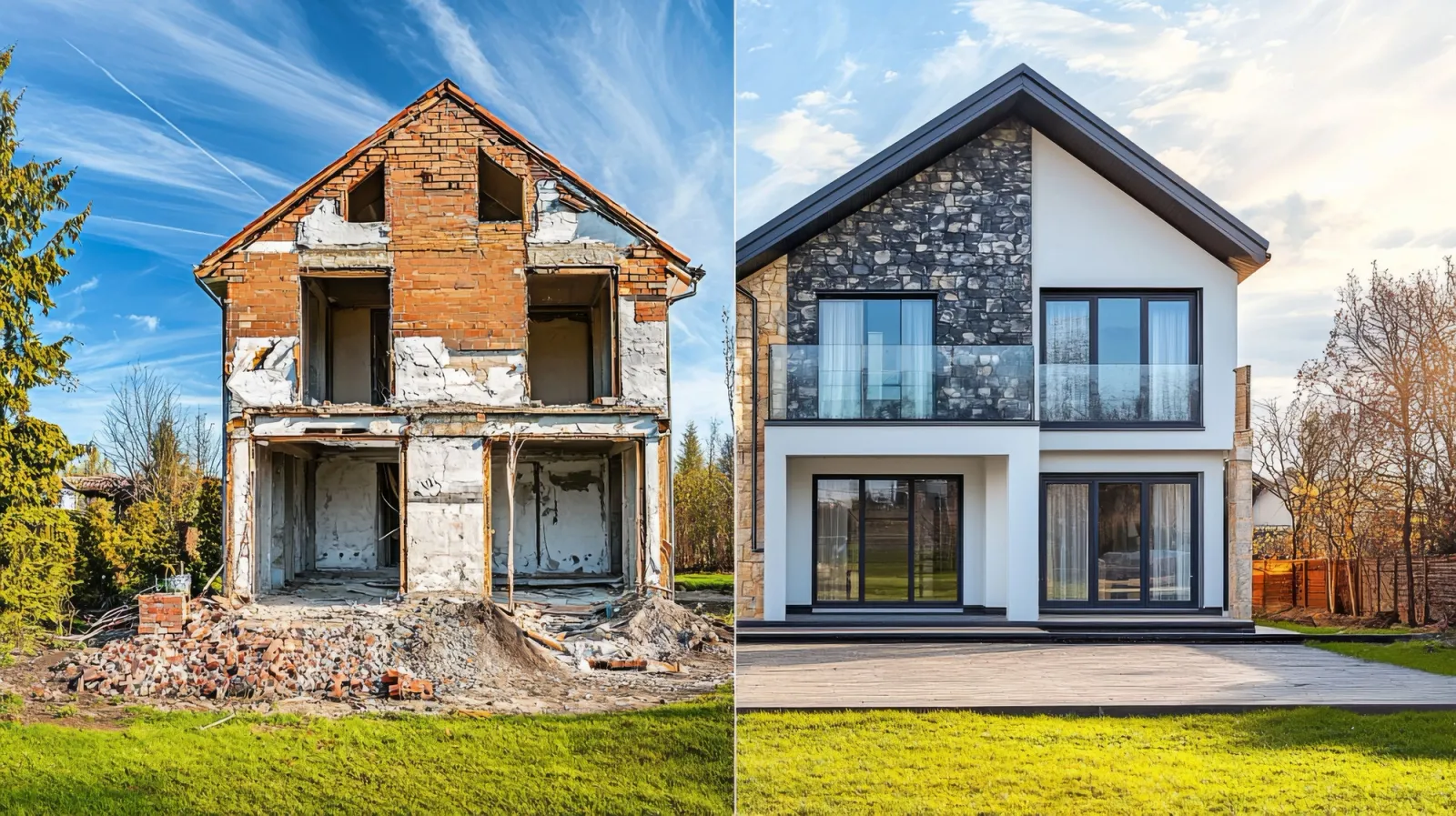
REI Strategies
How Long Does It Take to Flip a House? A Step-by-Step Timeline for Investors
5-minute read | Real Estate Investing | House Flipping Guide
Learn the BRRRR method step by step, then walk through a sample DFW deal with real Texas costs and the refinance trade-off between pulling cash out and keeping cash flow.

RFP Homes
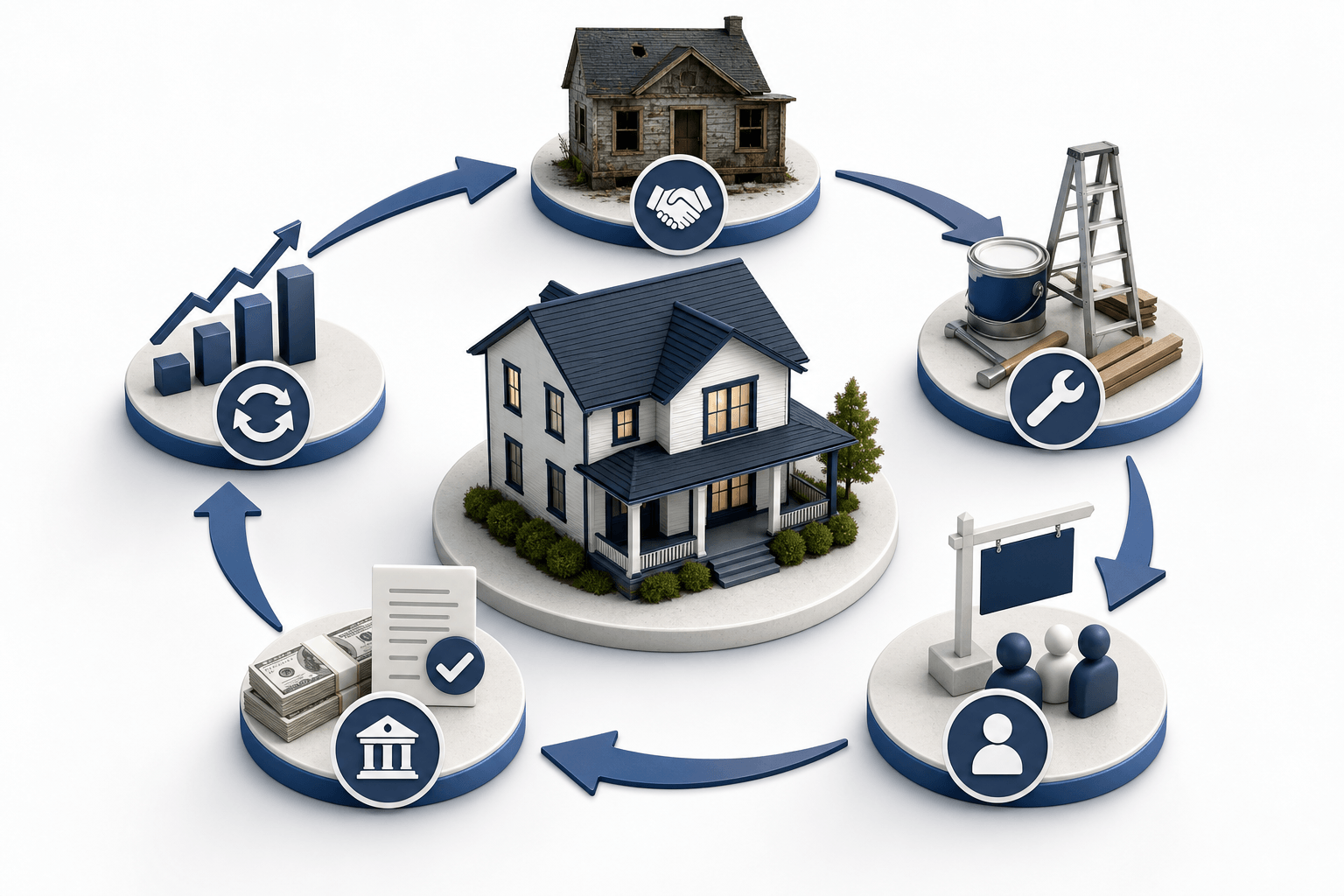
The BRRRR method has helped thousands of investors build rental portfolios without constantly injecting fresh capital into every deal. If you've ever wondered how experienced investors seem to recycle the same dollars across multiple properties, this is the framework behind it.
BRRRR stands for Buy, Rehab, Rent, Refinance, Repeat: a five-step cycle designed to let you pull most or all of your initial investment back out through a cash-out refinance, then redeploy that capital into the next deal. Done right, you end up with a cash-flowing rental and your money back in your pocket.
This guide walks through each step in detail, then applies the framework to a sample Dallas–Fort Worth deal so you can see how the numbers actually work, including the trade-off most BRRRR guides skip.
The core idea is simple: buy a distressed or undervalued property below market value, add value through renovation, stabilize it with a tenant, then refinance based on the new appraised value, not what you paid.
Because you bought at a discount and forced appreciation through the rehab, the refinance often returns a large portion of your invested capital. That capital goes into the next deal. The rental stays in place, generating monthly income.
It works because lenders base refinance amounts on current appraised value, not your purchase price. The gap between your all-in cost and the property's post-rehab value is where the strategy lives.
The BRRRR method only works if you buy right. Overpay at acquisition and no amount of renovation will save the math.
You're looking for properties with one or more of these characteristics:
The target is to acquire at 65–75% of after-repair value (ARV), all in, leaving room for rehab costs, holding costs, and a refinance that returns your capital.
This is exactly where RFP Homes is built to help. The RFP Homes marketplace focuses on discounted and off-market single-family properties across Dallas–Fort Worth. Each listing comes with comparable sales, investment calculations, and renovation context already attached, so you're not starting your analysis from scratch.
Before you make an offer, you need four numbers:
If your all-in cost lands at or below the target refinance amount, the deal has the potential to return most or all of your capital. If it's above, you'll leave money in the deal permanently.
The rehab phase is where you create value, and where budgets slip and timelines stretch. Discipline here protects your returns.
BRRRR renovations aren't luxury flips. You're not trying to impress buyers at an open house. You're renovating to a durable, clean, rental-grade standard that holds up over years of tenancy and appraises well.
Focus spending on items that affect both appraised value and tenant retention:
Avoid over-improving for the neighborhood. Your ARV is capped by the comps around you, so spending $40,000 on a kitchen in a $180,000 ARV market doesn't return the investment.
Get three contractor bids before committing. Build a 10–15% contingency into your budget. Visit the site weekly during construction. A reliable contractor is one of the core members of your investment team, and that relationship pays off on every future deal.
Once the property is renovated, you need it occupied before you can refinance. Most lenders require a signed lease, and sometimes a rent history, before approving a cash-out refinance on an investment property.
This is also where your monthly cash flow begins.
Price rent based on comparable rentals in the immediate area, not on what you need to cover your mortgage. The market sets the rent. Your job is to buy and renovate in markets where rents support your return targets. Run the full picture, including taxes, insurance, and vacancy, through our rental property calculator before you commit.
Screen tenants carefully. A bad tenant in a BRRRR property creates compounding problems: late payments disrupt cash flow, evictions delay your refinance timeline, and damage can erase the equity you worked to build.
At this stage, you're typically carrying a hard money loan or short-term bridge financing from the acquisition. The rate is high. Your goal is to move through the refinance quickly so you can replace that expensive debt with a long-term rental loan at a lower rate.
Some investors hold for 6–12 months before refinancing to establish rental history and stabilize income. Others move faster if the lender allows it.
This is the step that separates BRRRR from a standard buy-and-hold. You're not just holding the property. You're pulling your capital back out so you can use it again.
A cash-out refinance on an investment property typically allows you to borrow up to 70–75% of the appraised value. The lender orders an appraisal based on current condition. If your renovation did its job, that appraisal should reflect the ARV you projected at acquisition.
Say your ARV is $250,000. At 75% LTV, the lender will loan up to $187,500.
If your all-in cost was $175,000, the new loan pays off your acquisition financing and returns every dollar you put in, plus roughly $12,500 more. Your new loan is a 30-year mortgage at a much lower rate than your bridge loan.
If your all-in cost was $160,000, you come out about $27,500 ahead. You now own a cash-flowing rental with your original capital, plus that $27,500, in your account and ready to deploy into the next deal.
Both figures are before refinance closing costs, which often run 2–3% of the new loan. Plug your own numbers into our BRRRR calculator to see how much capital a deal returns.
That's the engine of the strategy.
Many conventional lenders require a seasoning period, typically 6–12 months of ownership, before they'll approve a cash-out refinance on an investment property. Some portfolio and DSCR lenders are more flexible. Know your lender's requirements before you close on the acquisition so your timeline is realistic.
Once the refinance closes, you repeat the cycle. The recovered capital goes into the next acquisition. The rental you just created stays in place, generating monthly income.
Over time, you build a portfolio of properties, each one acquired using capital recycled from previous deals. This is how investors build a portfolio that creates long-term wealth without needing a large new capital injection for every property.
The compounding effect is real. Each deal sharpens your market knowledge, strengthens your contractor relationships, and makes the next evaluation faster.
Here's how the BRRRR method plays out on a sample single-family deal in the Dallas–Fort Worth market. The numbers are illustrative, but the property taxes and insurance reflect what Texas investors actually pay.
After-repair value (ARV): $260,000, based on comparable sales. The all-in cost is 71% of ARV, inside the 65–75% target.
Texas has no state income tax, but its property taxes are among the highest in the country. Underestimating them is one of the most common ways a BRRRR deal that looked good on paper turns negative.
Both options assume a 30-year loan at 7.5%.
Option A: Maximum cash-out (75% LTV)
Option B: Conservative refinance (65% LTV)
Neither figure includes refinance closing costs or reserves for vacancy and repairs, so treat the cash flow as a ceiling, not a guarantee.
Option A is the textbook BRRRR result: every dollar comes back, and then some, ready for the next deal. But at today's rates, the rental only breaks even. You've recycled your capital, but the property isn't paying you.
Option B leaves $16,700 in the deal and earns about $2,000 a year on it, roughly a 12% cash-on-cash return. You recover most of your capital and keep a rental that actually cash flows.
Many investors land somewhere in between, pulling out as much as the rent can comfortably carry. The right answer depends on whether your priority is speed (recycling capital into the next deal) or income (monthly cash flow from this one).
Not every deal returns 100% of capital. Some leave 10–20% in permanently, and as this example shows, that can be the smarter choice. The goal is to minimize the capital you leave behind while keeping the rental cash-flow positive.
Pay too close to ARV and the refinance won't cover your costs. There's no fix for this after the fact. The deal's success is largely determined the moment you make your offer.
Scope creep and surprise repairs kill BRRRR deals. Get thorough inspections and detailed contractor bids before closing. Budget conservatively.
Property taxes, insurance, and management can eat $700 or more a month on a typical DFW rental. Run your cash flow with real Texas numbers before you decide how much to pull out at the refinance.
BRRRR works best in markets with strong rental demand, rising values, and a healthy pool of comparable sales. DFW has consistently shown those characteristics, which is part of why it attracts so many single-family investors. Rental demand is deep, and transaction volume supports reliable ARV analysis. For specific areas to target, see our guide to DFW rental property investment hotspots.
Talk to your refinance lender before you buy the property. Understand their seasoning requirements, LTV limits, and DSCR minimums. A lender surprise at month seven can strand your capital for far longer than planned.
The hardest part of BRRRR for most investors is finding deals that pencil. Retail MLS listings rarely offer the discount you need. You need access to off-market inventory, motivated sellers, and properties priced to reflect their condition.
RFP Homes is built specifically for this. The marketplace gives single-family investors in DFW access to discounted and off-market properties, with each listing already packaged with comparable sales, investment calculations, rental insights, and renovation context. You can evaluate a deal, schedule a showing, and work with a licensed advisor through contract and closing, all in one place.
Membership is free. RFP Homes is compensated through the transaction, not through fees to investors.
If you're running BRRRR deals in DFW, or looking to start, having a consistent source of pre-analyzed, off-market inventory is one of the biggest advantages you can build into your process.
BRRRR stands for Buy, Rehab, Rent, Refinance, Repeat. It's an investment strategy designed to let investors recycle capital across multiple properties by pulling equity out through a cash-out refinance after renovating and renting a distressed property.
You need enough capital to cover the purchase, full renovation, closing costs, and carrying costs before the refinance. On a typical DFW single-family deal, that could range from $50,000 to $200,000 or more depending on purchase price, rehab scope, and how much of it you finance. The refinance is designed to return most of that capital, but you need it available upfront. For a detailed breakdown, see how much money you need to buy an investment property in Dallas.
Most investors target an all-in cost of 65–75% of ARV. This leaves enough room for the refinance to return the majority of invested capital while accounting for lender LTV limits, typically 70–75% of appraised value on investment properties.
A typical BRRRR cycle runs 6–12 months. Rehab usually takes 2–4 months. Many lenders require 6–12 months of seasoning before approving a cash-out refinance on an investment property, though some portfolio and DSCR lenders are more flexible.
Most investors use hard money loans or short-term bridge loans at acquisition because they close quickly and don't require the property to be in move-in condition. After renovation and stabilization, the investor refinances into a conventional investment property loan or a DSCR loan.
Yes, but the math gets tighter. Higher refinance rates compress monthly cash flow, so you either need a larger acquisition discount or you leave more capital in the deal, as the sample deal above shows. The strategy still works when you buy well below ARV in markets with strong rental demand, like DFW, where rents have remained resilient.
In a traditional buy-and-hold, you purchase a property and hold it long-term without attempting to recover your initial capital. BRRRR adds the refinance step specifically to pull capital back out, allowing you to reinvest in additional properties rather than leaving all your equity locked in one asset.
The BRRRR method is one of the most practical frameworks in single-family real estate investing, but it only performs as well as the deal you start with. Buy right, rehab to standard, rent to a qualified tenant, refinance on the new value, and repeat.
If you're looking for off-market properties in DFW that are already analyzed and ready to evaluate, the RFP Homes marketplace is a good place to start building your pipeline.
Keep reading
More market analysis, financing strategy, and how-to guides for Dallas–Fort Worth investors.
5-minute read | Real Estate Investing | House Flipping Guide
Discover the top real estate investing strategies for 2026 in DFW. Build wealth through rentals, fix-and-flips, and smart market moves.
Make smarter HVAC decisions for your DFW investment properties. Compare system types, costs, and ROI by investment strategy in this 2025 guide.
Membership is vetted · No cost to join
See pre-vetted, off-market DFW deals before the market does, with a licensed advisor on your side from underwriting to closing.